Stucco repair
Why Fall Is the Best Time to Fix Stucco Cracks in Mesa
Learn why cooler fall and winter weather is the best time to patch stucco cracks on Mesa homes, and how early repairs hold up through monsoon season.
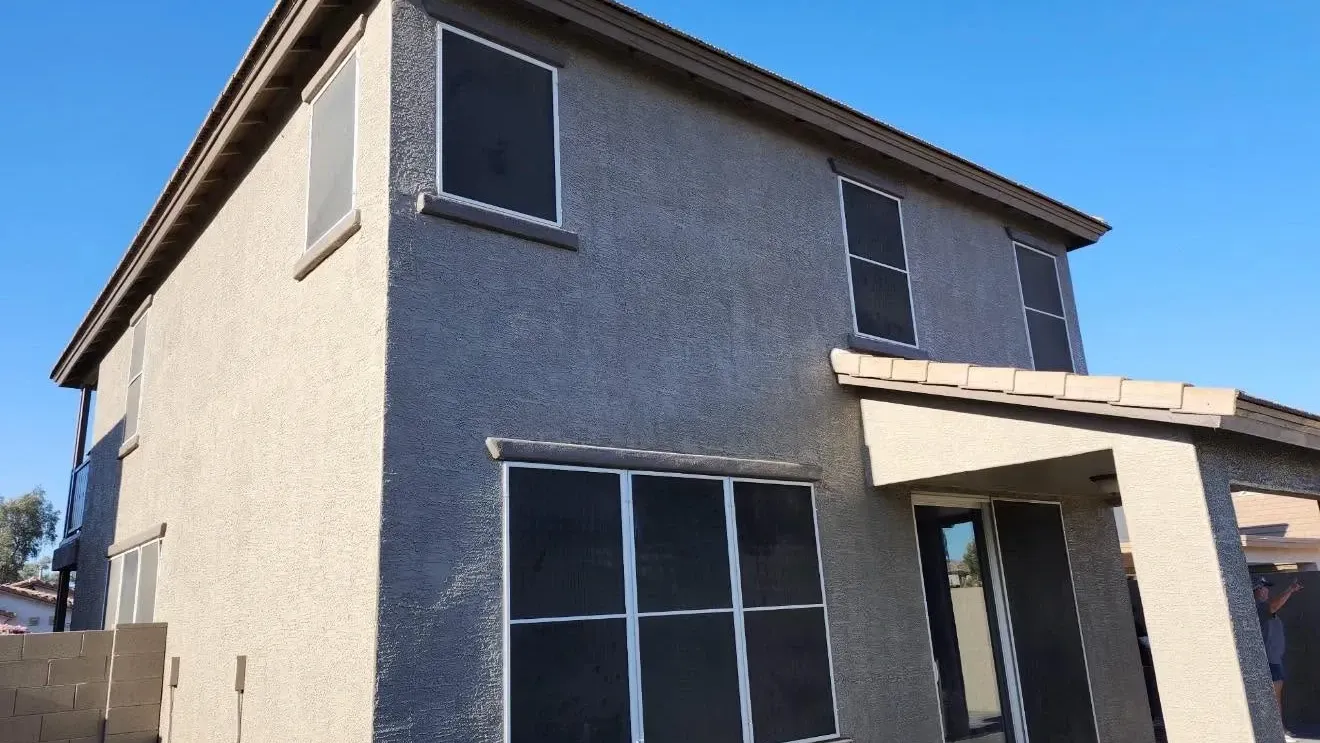
Fall and winter are the easiest months of the year to repair stucco in Mesa. Daytime highs in the 60s and 70s let patch material cure at a steady pace instead of drying out before it bonds. The timing helps in a second way too. Every crack you seal now is one less opening for rain to find when monsoon storms return next summer. If thin cracks have started showing up on your walls, this is the season to deal with them.
Why cooler weather makes stucco repairs last longer
Cooler air gives a stucco patch the time it needs to cure properly. Portland cement-based patch material does not simply dry out. It hydrates, and that reaction needs moisture to stay in the material long enough to build strength. Industry guidance treats anything above 100 degrees, or above 90 degrees with wind over 8 mph, as hot weather application that calls for extra protection. A Mesa summer crosses that line most days.
When a wall is that hot, the patch stiffens on the surface before it has bonded underneath. Fresh paint behaves the same way, which is part of why peeling and chalking paint turns up on so many Arizona homes a year or two after the work was done.
| What Changes | Summer Repair | Fall or Winter Repair |
|---|---|---|
| Wall surface temperature | Often well over 120 degrees in direct sun | Mild through most of the working day |
| Cure speed | Rushed, moisture evaporates early | Steady, full hydration |
| Bond strength | Slightly higher chance the crack reopens | Stronger, texture holds |
| Paint over the repair | Risk of blistering and peeling | Even, lasting finish |
What causes cracks in Mesa stucco
Most cracks come from movement, not from bad stucco. Walls expand in the heat and contract as it cools, framing shifts a little as a house ages, and soil under the slab moves as its moisture changes. Thin hairline cracks, usually narrower than a sixteenth of an inch, are the most common result.
Width and direction tell you how much to worry. Our guide to stucco crack types and causes goes through that in detail. The short version is that straight hairline cracks are usually cosmetic, while diagonal cracks running off the corners of windows and doors suggest movement that deserves a closer look.
What happens if you wait for monsoon season
Waiting turns a small repair into a big one. A dry hairline crack in January does nothing at all. The same crack in July takes on wind-driven rain, and monsoon storms across the Phoenix area regularly bring gusts strong enough to drive water sideways into a wall. That season runs from June 15 through September 30 each year.
Once water gets behind stucco, it has nowhere to go. It can:
- Soak and rot the wood sheathing behind the wall
- Push paint off from the inside as bubbles or peeling
- Leave dark staining that spreads across the surface
- Turn a surface patch into a framing repair
Sealing cracks while the weather is dry and mild gives the wall a water-resistant surface long before that pressure ever arrives.
What a stucco repair involves
A proper repair is a sequence, not a smear of patch over a crack. On a typical Mesa home, the work runs like this:
- Inspect each crack for width, depth, and likely cause
- Clean out loose material so the patch has something to grip
- Apply a flexible patch compound suited to the existing finish
- Match the surrounding texture so the repair disappears
- Seal, prime, and finish the area so it sheds water
Our stucco repair crew covers Gilbert, Mesa, and San Tan Valley, and the same team of painters in Mesa handles the finish coat when a wall needs one. Nate walks the job with you first, then sends a written quote with the scope and photos, so nothing on the final invoice is a surprise.
Repair first, then repaint
Painting over an unrepaired crack hides the problem instead of fixing it. Moisture still works its way in through the opening, and the new coat fails around it within a season or two. Repairs come first, every time.
Fall suits exterior painting for the same curing reasons it suits patching, so it makes sense to handle both at once. Our exterior painting service includes repairing damaged stucco before any coating goes on, and our post on exterior painting cost, prep, and timeline covers what a full repaint involves. Doing both together also means one schedule, one crew on site, and one cleanup instead of two.
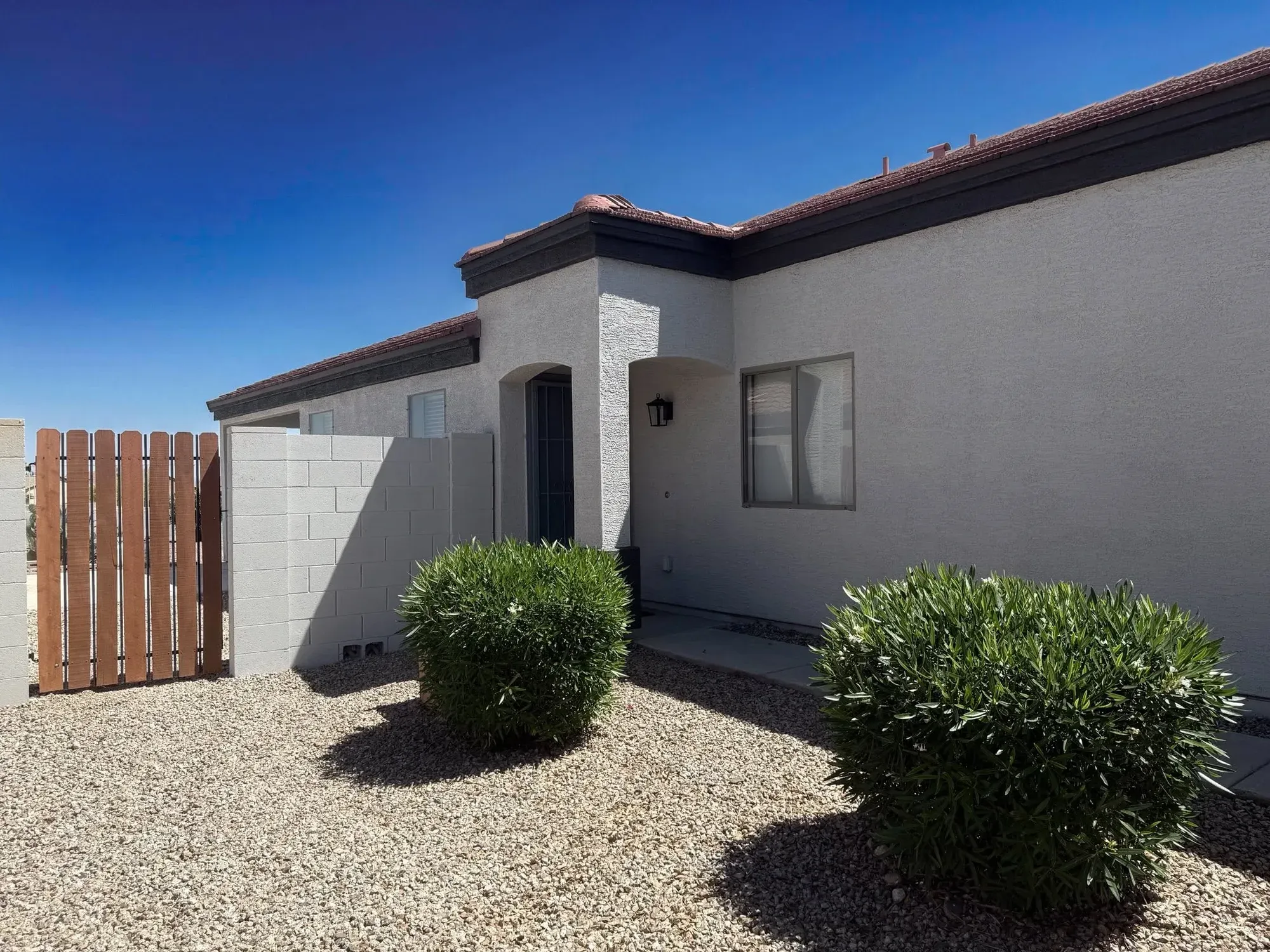
Schedule your Mesa stucco repair before next summer
Cooler months are the busiest stretch of the year for exterior work, and the calendar fills up as spring gets closer. Call Kodiak Paint & Construction at (602) 694-6873 or request a free quote to get your walls looked at. We serve Gilbert, Mesa, San Tan Valley & the East Valley, AZ, Monday to Sunday, 7 AM to 7 PM.
FAQs about stucco crack repair in Mesa
Can stucco be repaired year-round in Mesa?
Yes, though the results are better in cooler months. Summer heat pulls moisture out of patch material too quickly, which weakens the bond and shortens how long the repair holds.
How do I know if a crack is serious or just cosmetic?
Width and direction matter most. Thin, straight hairline cracks are usually minor. Wider cracks, or diagonal ones near corners and openings, often point to movement that needs an inspection.
Does stucco repair have to happen before painting?
Yes. Paint over a crack and the opening is still there under the finish, ready to take on water during monsoon season. Repair first, then paint.
How long does a typical stucco repair take?
It depends on how many cracks there are and how wide they run. Most residential repairs finish in days rather than weeks, especially when they are scheduled alongside exterior painting.
Will the patch match the rest of my wall?
It should. Texture matching is part of the job, and a repair that blends into the surrounding finish is the difference between a fix you notice and one you never see again.
More about this work: Stucco Repair in Gilbert & the East Valley