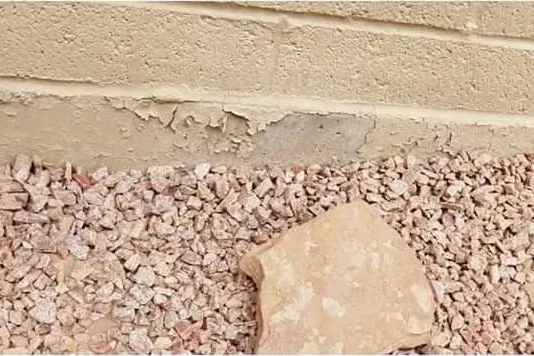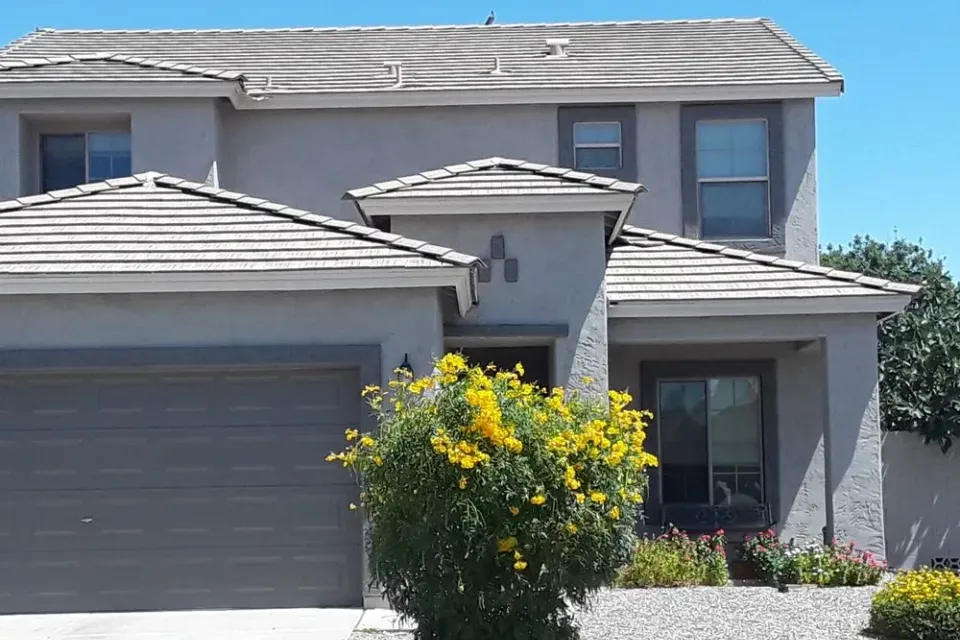
Stucco repair
Stucco Cracks in Arizona: Crack Types, Causes, and Fixes
What the width and direction of a crack actually tell you, which ones need attention this week, and what a repair that disappears into the texture involves.
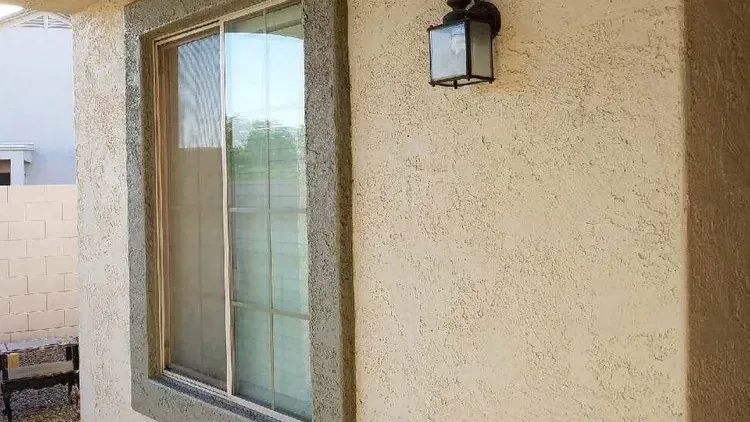
Stucco holds up well in the desert, but it does not stay crack-free forever. If you have noticed a thin line running down an exterior wall or a crack creeping out from a window corner, you are looking at something almost every Arizona homeowner deals with eventually. Below, you will learn what kind of crack you have, why it showed up, and what it takes to fix it the right way.
Why Arizona weather and soil crack stucco
Most stucco cracks in Arizona come from movement, not from bad stucco. Your walls expand in the heat, contract when it cools, and shift with the ground underneath them. Because stucco is rigid, something has to give, and that something is usually the surface.
Heat is the biggest daily factor. Phoenix averages 111 days a year at 100 degrees or hotter, according to National Weather Service records, and overnight lows often fall 25 to 30 degrees below the daytime high. So your stucco expands and shrinks a little every single day, and after a few years those tiny movements add up.
Soil is the other factor. Clay-heavy soils across the East Valley swell when they take on water and shrink hard during dry stretches. On top of that, land subsidence and earth fissures affect more than 3,000 square miles of Arizona, according to the Arizona Geological Survey, including parts of Maricopa and Pinal counties. When the ground under your slab moves, your walls move with it.
A few other causes show up often:
- Normal settling during a home's first few years
- Water getting behind the stucco from a roof leak, poor drainage, or a sprinkler hitting the wall
- Monsoon wind driving rain into small openings
- Missing, failed, or painted-over expansion joints
- Thin or poorly mixed stucco from the original application
The good news is that most of these can be handled with targeted stucco crack repair and texture matching rather than refinishing an entire wall.
Common stucco crack types and what they mean
Width and direction tell you most of what you need to know. Use this as a quick reference before you call anyone.
| Crack type | What it looks like | Usual cause | How serious |
|---|---|---|---|
| Hairline cracks | Thin lines under 1/16 inch, often random | Heat expansion, normal curing | Cosmetic, but seal them |
| Spider or map cracking | A web of fine lines over a large area | Stucco dried too fast or mix was off | Cosmetic, needs resurfacing |
| Diagonal cracks | Angled lines from window or door corners | Settling or soil movement | Watch closely, often needs reinforcement |
| Vertical cracks | Straight up and down, sometimes at joints | Expansion joint failure, framing movement | Moderate, let water in if wide |
| Horizontal cracks | Straight across the wall, often at floor lines | Foundation movement or trapped moisture | Most serious, get it inspected |
Which stucco cracks need attention right away
Act quickly if a crack is wider than 1/8 inch, is clearly growing, or shows any sign of water. Those three signals separate a cosmetic blemish from a moisture or structural problem.
Here are the warning signs worth checking this week:
- The crack has widened since you first noticed it
- Stains, bubbling paint, or chalky residue around the opening
- Dark building paper or wire mesh visible inside the crack
- A hollow sound when you tap the wall near it
- Doors or windows that suddenly stick
- Matching cracks on the matching interior wall
That last one matters most. When interior drywall cracks line up with exterior stucco cracks, the movement is coming from the structure or the soil underneath, not from the finish. In that case, the repair needs to address both sides.
How professional stucco repair works
A proper repair removes loose material, rebuilds the layers, and matches the texture so the patch disappears. Here is how the process normally runs:
- Inspect and find the cause. We look for the source first, whether that is drainage, a leak, or ordinary movement.
- Open the crack. Narrow cracks get widened slightly into a V so the filler has something to grip.
- Clean it out. Dust and loose stucco are cleared away, because patching material will not bond to debris.
- Reinforce and fill. Wider cracks get mesh or fiber tape, then patching material goes on in thin layers instead of one thick pass.
- Match the texture. Lace, sand, dash, or smooth finishes each need a different technique to blend in.
- Cure, prime, and paint. Fresh stucco stays porous until it cures, so it needs the right primer before color goes on.
Step six is the one homeowners skip most often, and it is why so many DIY patches end up as pale blotches on a wall. Since we handle both the patching and the exterior painting, the repaired area gets sealed and blended by the same crew.
When to repair stucco before you repaint
Always repair first, then paint. Paint does not fill cracks, and it will not stop water from getting behind the wall. Instead, it bridges the gap for a season or two, then splits right along the same line.
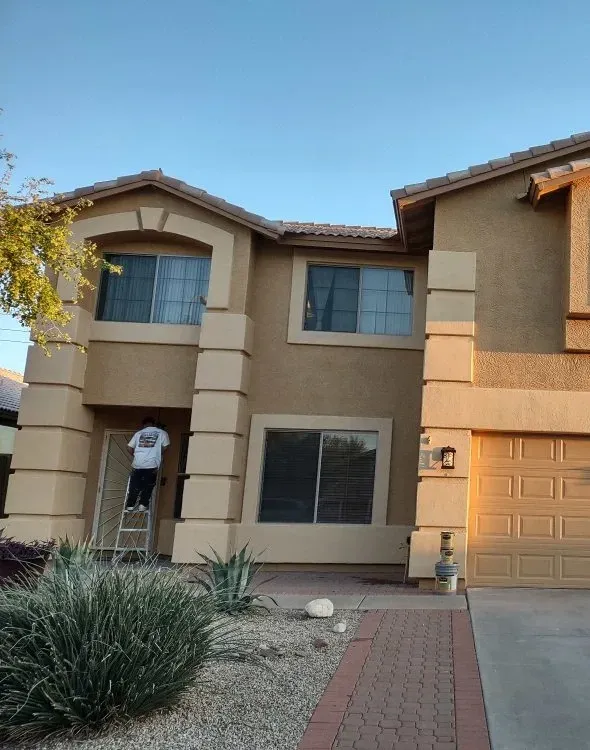
If you are planning a full repaint anyway, bundling the two saves you money, since the crew is already set up with ladders and masking. Our breakdown of exterior house painting cost, prep, and timeline explains how much of a repaint budget actually goes toward prep work like this. For homes closer to the 60 and 202, our painting crew in Mesa handles the stucco repair and the repaint in one visit.
How to keep new stucco cracks from forming
You cannot stop the desert from moving your house, but you can slow down the damage considerably.
- Aim sprinklers away from walls. Repeated soaking is one of the fastest ways to ruin a stucco base.
- Keep water moving away from the foundation. Soil should slope away from the house, and downspouts should discharge several feet out.
- Seal and repaint every five to seven years. A quality elastomeric coating flexes with the wall instead of cracking over it.
- Check your expansion joints yearly. If they are caulked shut or painted solid, they cannot do their job.
- Trim shrubs back. Plants against the wall trap moisture and hide early damage.
- Fix roof and flashing leaks fast. Most serious stucco failures start as a small water problem somewhere above.
Get your stucco looked at before it spreads
A crack that costs a little to patch today can turn into a wall rebuild after a monsoon season or two. Nate looks at every job personally, explains what the wall actually needs, and sends a written quote with photos and no surprises.
Call (602) 694-6873 or request your free quote to get your stucco inspected. Kodiak Paint & Construction serves Gilbert, Mesa, San Tan Valley & the East Valley, AZ,Monday to Sunday, 7 AM to 7 PM.
FAQs about stucco cracks
Are hairline cracks in stucco normal?
Yes. Thin cracks under 1/16 inch are common on almost every Arizona home and are usually cosmetic. Still, seal them so water cannot work its way in and make them wider.
Can I just caulk a stucco crack myself?
You can for very fine cracks, as long as you use an elastomeric sealant made for masonry. However, caulk on a wide or growing crack is a temporary cover, not a repair, and it rarely matches the texture.
How long does stucco repair take?
Most crack and patch jobs take one to two days of work, plus curing time before paint goes on. Larger areas with heavy damage can run longer.
Will the repair be visible after it is painted?
Not if the texture is matched correctly. A patch that blends in depends more on the texture technique than on the paint, which is why texture matching is a separate skill.
Does homeowners insurance cover stucco cracks?
Usually not, since most policies treat cracking from heat, soil movement, and age as maintenance. Damage from a sudden covered event, such as a storm, may be a different story, so check your policy.
More about this work: Stucco Repair in Gilbert & the East Valley